

Holding Space
This study explores how displacement and chronic underinvestment threaten Toronto’s Black-led community institutions and why protecting these spaces is critical to equity, belonging, and care.
Led by: Prentiss Dantzler
Team: Prentiss Dantzler, Abi Meza, Asha Mudie, and Untitled Planning
Community Partner: Somali Centre for Culture and Recreation

background
Across Toronto, Black-led community organizations play a vital role as social infrastructure—providing spaces of care, cultural expression, advocacy, and belonging in the face of systemic inequities. Yet these institutions are increasingly shaped by the same forces transforming the city around them, including chronic underinvestment, rising real estate costs, and displacement driven by redevelopment and gentrification.
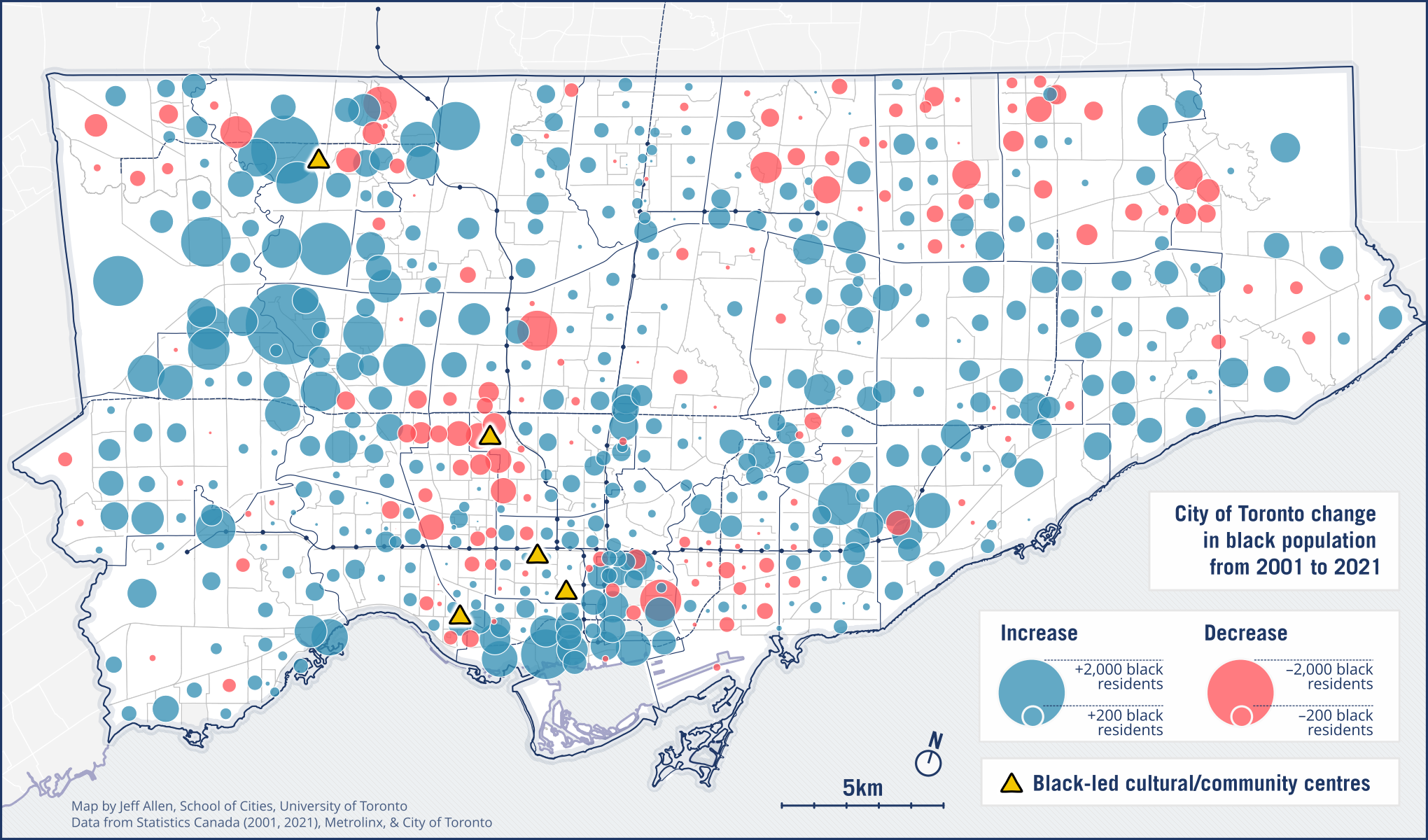
Holding Space examines how these dynamics have reshaped the geography of Black-led social infrastructure over the past two decades, combining organizational profiles with spatial analysis to understand how community institutions both anchor neighbourhood life and confront mounting pressures. Focusing on five Black-led organizations, the report highlights how policy gaps and short-term funding models undermine long-term stability, even as these spaces remain essential to sustaining Black presence, culture, and collective care in Toronto.
Findings
This study combines organizational case studies and spatial analysis to assess how Black-led community institutions operate as social infrastructure, and how they are affected by displacement, redevelopment, and uneven investment across Toronto.
Key findings include:
Black-led community organizations act as essential social infrastructure, providing spaces of care, culture, and belonging in neighbourhoods shaped by long histories of underinvestment.
Many of these institutions are located in areas experiencing rising housing costs, redevelopment pressures, and demographic change, increasing risks of displacement and instability.
Declines in nearby Black populations in central neighbourhoods contrast with population growth in outer areas of the city, where community-anchored infrastructure is more limited.
Insecure tenure, escalating real estate costs, and short-term funding models undermine the long-term sustainability of Black-led spaces, even as demand for their services grows.

To learn more about SCCR and other local supports, explore: